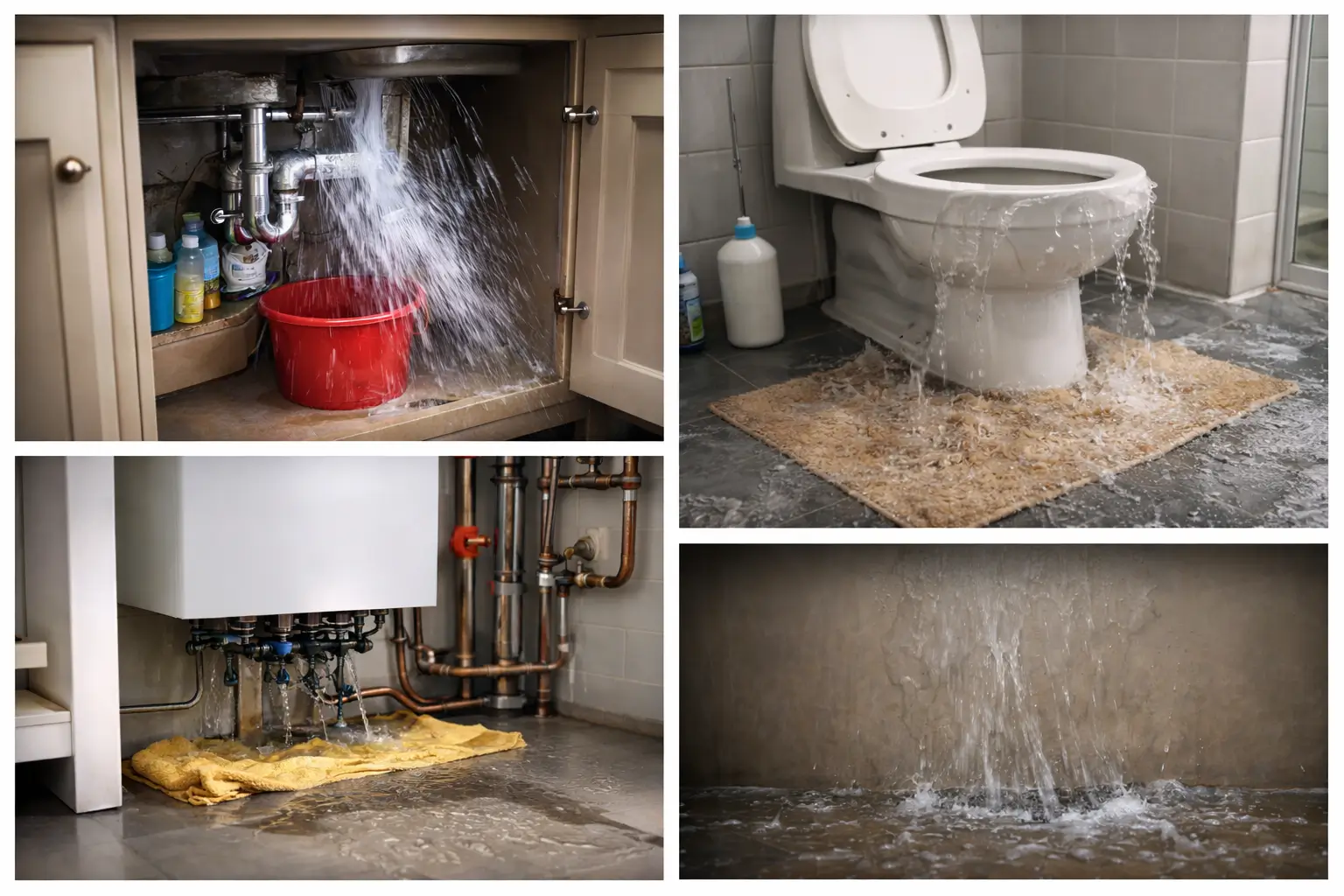
Water streaming down the windows, steamed-up mirrors and black spots in the corners of the ceiling are all signs of condensation. It is one of the most common problems in London homes, particularly in winter and in flats with small kitchens and bathrooms.
The good news is that you can usually stop condensation yourself with a few changes to how you ventilate and heat your home. This guide explains what causes it and what you can do about it.
Everyday activities put a surprising amount of moisture into the air. Cooking, boiling the kettle, showering, drying clothes indoors and steam ironing all release water vapour. Even breathing adds moisture, which is why bedrooms often have wet windows in the morning.
Warm air holds more moisture than cold air. When that warm, damp air touches a cold surface such as a window, an outside wall or a cold-water pipe, it cools and the moisture turns back into water. That is condensation. Left alone, it soaks into plaster, paint and window frames, and leads to damp patches and mould.
So there are three ways to tackle it: produce less moisture, get the moisture out of the house and keep surfaces warm enough that it does not settle on them.
Quick tips for reducing condensation
Start with these simple habits. Between them they deal with the biggest sources of moisture in most homes.
Baths and showers
- Bathrooms are usually the biggest source of condensation in a home
- Keep the door closed while you bathe or shower so steam does not spread to other rooms
- Open the window or switch on an extractor fan that vents to the outside
- Close the door behind you when you leave
- Leave the fan running or the window open until the mirror and windows have cleared
Cooking and boiling water
- Keep the kitchen door closed while cooking so humid air does not drift through the house
- Put lids on pans to cut down the steam
- Use a cooker hood that vents outside, rather than one that just recirculates the air, or open a window
- Close the door again when you leave the kitchen
Drying clothes indoors
- Dry clothes outside whenever you can
- If you have to dry them indoors, use one room with the door closed and a window or trickle vent open
- Avoid hanging wet washing on radiators. If you use a tumble dryer, make sure it is vented outside or is a condenser model that is emptied regularly
Ironing
- Steam irons and damp clothes release moisture, so treat ironing like drying clothes
- Close the door of the room you are ironing in
- Open a window or trickle vent for a short while to let the moist air out. You do not need to leave windows open all day
Extractor fans for ventilation
Good ventilation lets moist air out and drier air in, and it is the single most effective way to stop condensation. A working extractor fan in the bathroom and kitchen does most of that job for you.
An extractor fan pulls steam out of the room at the source and sends it outside through a duct, before it has a chance to settle on cold walls and windows. Clearing that moisture quickly is the key to preventing damp and mould.
Bathroom extractor fans
Building Regulations (Approved Document F) set out ventilation standards for bathrooms, and when a bathroom is refitted an extractor fan is usually the simplest way to meet them. It is also more practical than an open window: few people want a cold draught the moment they step out of the shower in January.
Switch the fan on when you start your bath or shower and leave it running afterwards until the room has cleared. Keep the door closed while it runs so the steam goes out through the fan rather than into the rest of the house.
Even better is a humidistat fan, which switches itself on when it senses high humidity and off again once the air has dried out. It takes the guesswork out of ventilating a bathroom, and it keeps working when someone forgets to switch it on.
Kitchen cooker hoods
Kitchens produce a lot of moisture from pans, kettles and washing up. There are two types of cooker hood: extraction hoods, which send air outside through a duct, and recirculation hoods, which filter out grease and smells and then blow the same damp air back into the room.
Only an externally vented hood actually removes moisture. Fitting one can be more involved, because a duct has to be run to an outside wall, but if you have a recirculation hood and a condensation problem, it is worth considering. Some newer models have humidity sensors that speed up the fan when you are boiling water and slow it down once the air has cleared.
Switch the hood on whenever you cook, boil the kettle or wash up, and leave it running for a while afterwards to clear the whole room.
Heating and insulation
Condensation forms on cold surfaces, so a warmer home gets less of it. Keeping the heating on at a steady, moderate temperature through the colder months is usually better than letting rooms get very cold and then heating them up quickly. Try not to leave spare rooms completely unheated, and keep furniture a little away from outside walls so air can circulate behind it. If some radiators stay cold or the heating is struggling to keep up, a central heating service can get the system working properly again.
Insulation helps for the same reason. Double glazing keeps the inside pane warmer than single glazing, and cavity wall or internal wall insulation keeps the inner face of the wall warmer, so less moisture condenses on it. But insulation is a bigger and more expensive job, so deal with ventilation and moisture first. If you have cut down the moisture and still have condensation, cold walls or windows are the likely cause.
Dealing with damp and mould
Wipe condensation off windows and sills each morning so it does not soak into frames and plaster. Small patches of mould can be cleaned with a mould remover, following the instructions on the product. A dehumidifier can also help in rooms that stay damp. If a damp patch keeps coming back in the same place, or appears on a wall or ceiling where there is no obvious steam, it may be a leak rather than condensation, and leak detection can find the source.
Stop condensation in your home
Most condensation can be brought under control with better ventilation and steady heating. If you need an extractor fan fitted or replaced, your heating looked at or mould-damaged walls repaired and redecorated, our property maintenance team can help. Call Jennings on 020 3280 8997 for a free, fixed-price quote.